CinePixo
ReviewsOff CameraMoviesPeopleTopicsCriticsStats
Sign inJoin
ReviewsOff CameraMoviesPeopleTopicsCriticsStats
CinePixo
ReviewsOff CameraMoviesWatchCriticsStatsAboutContactPrivacyTermsRSS

CinePixo — a home for film-critic fandom.Built, filled and argued over by this community — the library, the artwork we license and host, the taxonomy and every signed review grow here, together.

  1. Home
  2. /Off Camera
  3. /Industry
  4. /An AI Studio Opened Next Door to Culver City. Its Sound Stage Was a Corner of the Office
Industry

An AI Studio Opened Next Door to Culver City. Its Sound Stage Was a Corner of the Office

Promise is making an AI-assisted horror film within sight of the lots where Singin' in the Rain was shot, on a budget in the low millions. The unsettling part of the reporting is not what the software can draw. It is the list of things the software makes unnecessary.
by CinePixoAugust 20, 20264 min read2 views
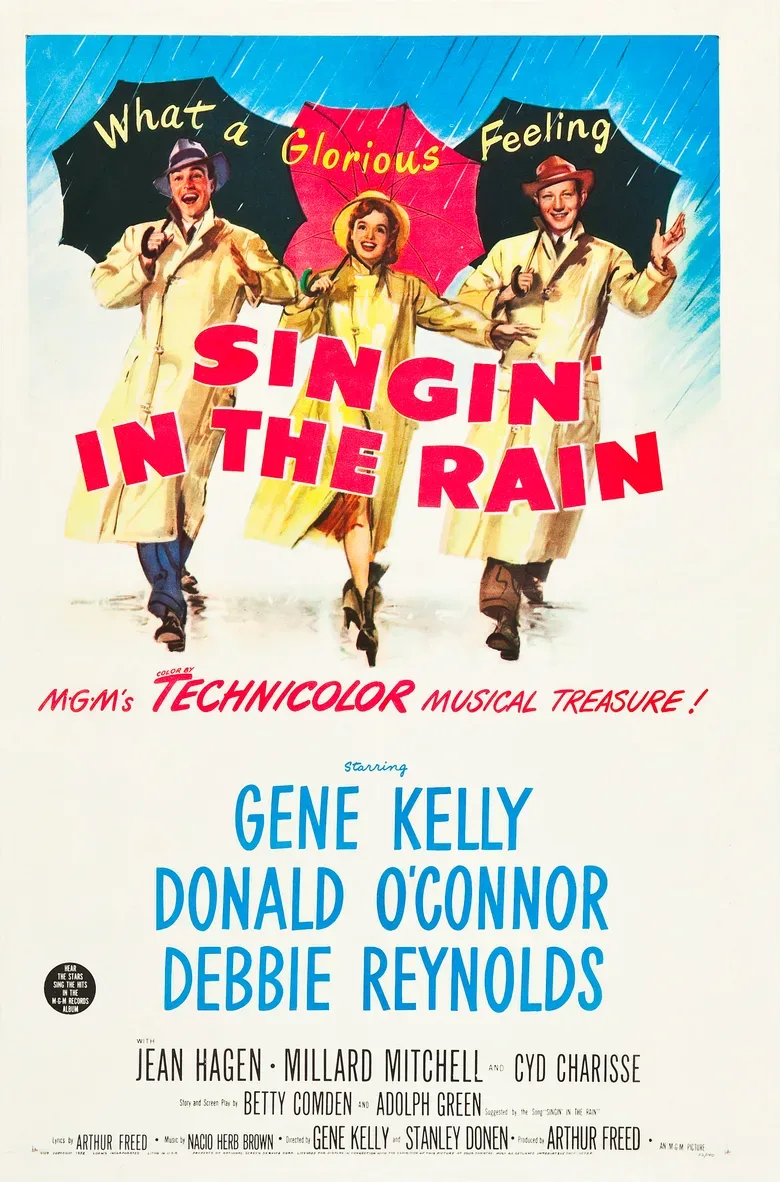
The 1952 poster for Singin' in the Rain, the film shot on the Culver City lot the piece opens beside.
The 1952 poster for Singin' in the Rain, the film shot on the Culver City lot the piece opens beside. · Copyright 1952 Loew's Incorporated (Public domain)

In this piece

  1. 01A corner of the office
  2. 02What gets made unnecessary
  3. 03The part nobody announces
  4. 04The word doing the most work

A corner of the office

Robert Booth's report for the Guardian has a detail in it that will stay with me longer than any of the numbers. He visited Promise, an AI studio that set up this summer near the colonnaded entrance to Sony Pictures' Culver City lot — close enough that the artists working there can see the ground where Singin' in the Rain and Men in Black were shot. Promise is shooting its own newly announced horror film, Touch Grass, for a budget in the low millions of dollars.

The sound stage, Booth writes, was little more than a corner of the office.

That is the whole argument in one sentence, and it is not an argument about image quality. A hundred years of film industrial history is stacked up on the other side of that wall — the stages, the shops, the standing sets, the crews who know where everything is — and the company next door has concluded it does not need to get past the wall to make a movie.
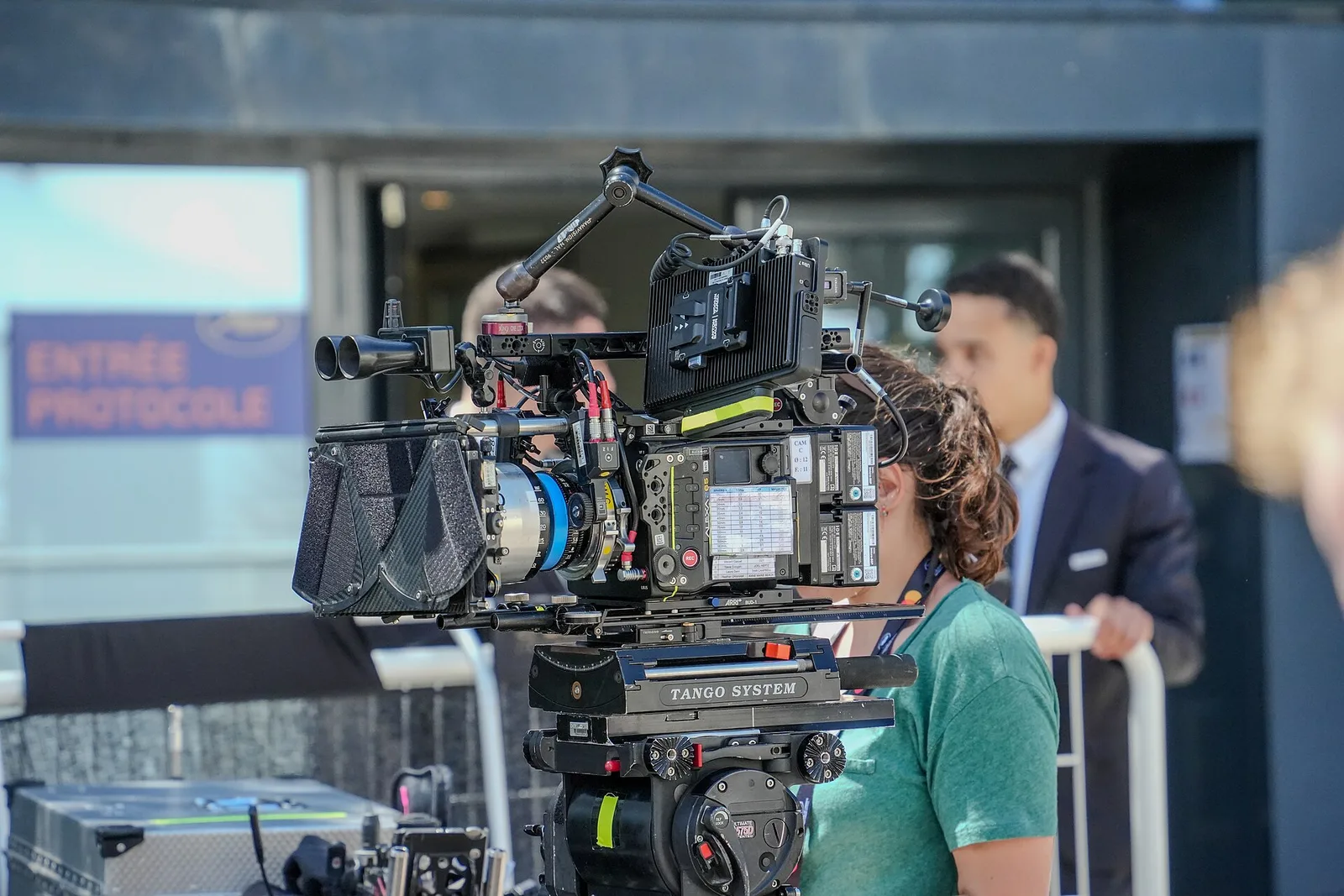
A professional film camera rigged on a set, photographed at Cannes in May 2026.

Photo: Elyot Boudart · CC BY-SA 4.0 · source

What gets made unnecessary

Promise is backed by Google, by Silicon Valley venture capital, and by Disney. Its models generate backgrounds, special effects, and what the reporting calls synthetic performers; some are American, and some are market-leading Chinese systems. The result, in Booth's phrasing, is that the vast sound stages and the financing of traditional studios are becoming less necessary.

Less necessary is the phrase to sit with. Studio infrastructure has never only been infrastructure. The reason a first feature was hard to make was partly technical and mostly institutional: somebody with a stage and a bank had to agree that you should be allowed. Every filmmaker who has described their twenties has described that gate.

So when the filmmakers Booth spoke to say the technology could let them bypass the studio giants and take more creative risks, I understand the appeal exactly, and I notice which risk is being described. The risk of asking permission is the one being removed. The risk of a bad film is untouched.

Google is on both sides of this. In June it put about seventy-five million dollars into A24 through a partnership with DeepMind, to build filmmaking tools — the specialist independent distributor of the last decade, capitalised by the company whose models the tools will run on. TechRepublic covered the deal and illustrated its own article with an image generated by Google's Nano Banana, which is either very funny or the tidiest possible summary of where this is going.
In this piece

  • Singin' in the Rain posterSingin' in the Rain1952 · Stanley Donen, Gene Kelly
  • Men in Black posterMen in Black1997 · Barry Sonnenfeld

Sources

  1. 01theguardian.com · https://www.theguardian.com/film/2026/aug/16/directors-embracing-ai-film-making
  2. 02eweek.com · https://www.eweek.com/news/ai-film-studios-hollywood-production-model/

In this piece

  1. 01A corner of the office
  2. 02What gets made unnecessary
  3. 03The part nobody announces
  4. 04The word doing the most work

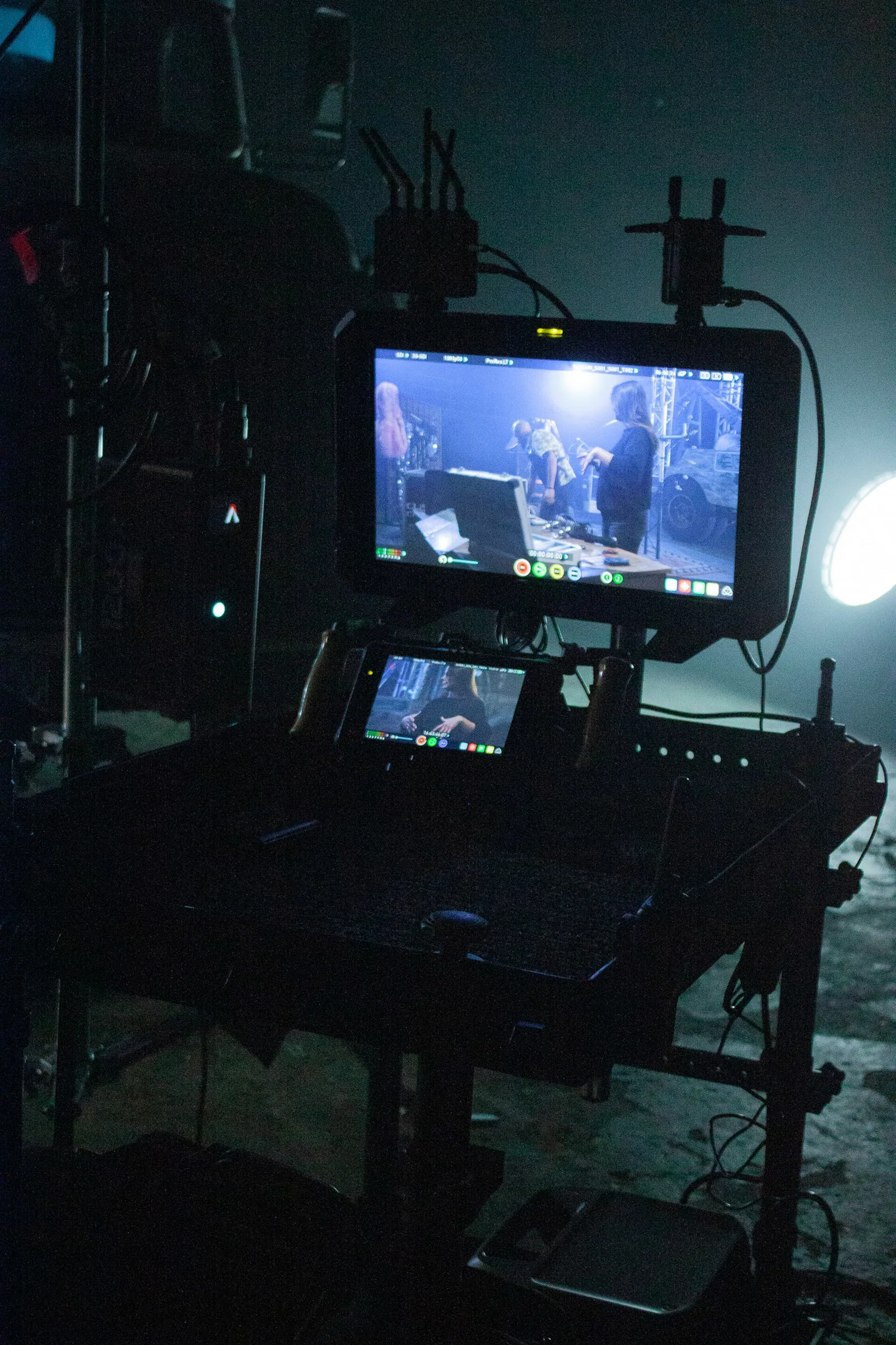
A camera set up for indoor filming, with its rig and lighting around it.

Photo: Nirvana Studios - Custom Circus · CC BY 4.0 · source

The part nobody announces

While the new studios talk, the old ones are quiet.

Deadline's Jake Kanter reported in June that studios are already using the technology to tweak films they have made and are keeping hush about how. His framing was cosmetic surgery, and the sting in it is not the procedure. It is the silence: keeping it quiet, he wrote, has consequences for everyone.

He is right, and the consequence is specific. A viewer can form a view about a synthetic performer they were told about. A viewer cannot form any view at all about a face that was smoothed, a crowd that was thickened or a line that was regenerated in post without a word said. Undisclosed use hides the technique and then removes the audience's standing to have an opinion about it, which is a strange thing to take from the people paying for the ticket.

The trade coverage has settled into two stories that do not talk to each other. eWeek and others write about AI studios challenging the traditional production model, which is a story about competition. The post-production reporting is about AI rewriting how the work inside existing films gets done, which is a story about disclosure. The first will be argued in public for years. The second is being decided now, invisibly, in films that are already in cinemas.

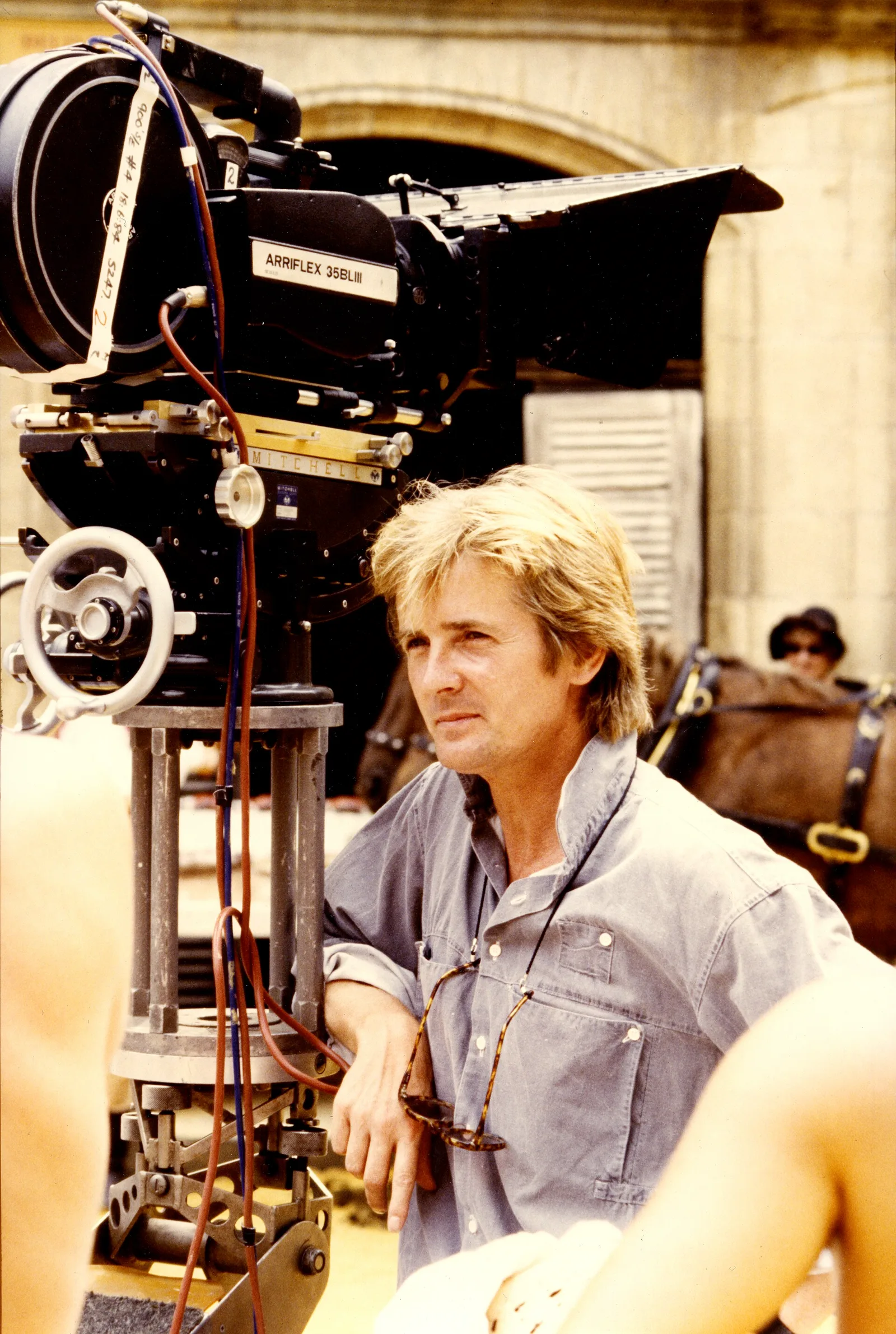
The director Franc Roddam standing beside an Arriflex film camera on set.

Photo: Pat Latimer · CC BY-SA 3.0 · source

The word doing the most work

Synthetic performers.

Every other term in this story describes a tool. Backgrounds, effects, workflows, pipelines — a background has never had an opinion about its own use, and nobody has to be consulted about a matte painting. That one phrase describes a person's replacement in the grammar of a job listing, and it goes by in the reporting at the same speed as the rest.

On the set in Culver City, an actor named Tori Thomas was working on Touch Grass. The Guardian's photograph is of a real performer, in a real corner of a real office, making a film that will be finished by systems trained on other performers' work. Both halves of the argument were standing in the same room, and only one of them was on the call sheet.

  • 03techrepublic.com · https://www.techrepublic.com/article/news-google-a24-ai-filmmaking-deepmind-investment/
  • 04deadline.com · https://deadline.com/2026/06/is-ai-hollywood-new-cosmetic-surgery-1236958187/
  • 05themovieblog.com · https://www.themovieblog.com/2026/08/hollywood-vfx-in-2026-how-ai-is-rewriting-post-production-workflows/
  • Every factual claim above is drawn from these. The reading of them is ours.

    AI film studios HollywoodPromise AI studio Touch GrassGoogle DeepMind A24 dealsynthetic performers AIAI visual effects disclosureAI post-production Hollywood

    4 min read

    ShareXFacebookThreads
    C

    CinePixo

    Founder of CinePixo — a home for film-critic fandom.

    More Industry

    All of it →
    Industry

    Lee Chang-dong Returns to Venice After 24 Years. Netflix Is Sending Him to Theaters First

    Possible Love premieres in Venice competition on September 6, opens in Korean cinemas on September 23 and reaches Netflix on November 6. It is Lee Chang-dong's first film in eight years, and the order of those three dates is the most interesting decision anyone made about it.

    CinePixo·Aug 19, 2026

    Industry

    The New Beatles Crossed Abbey Road. One Famous Image Cannot Tell Four Movies What They Are

    Paul Mescal, Harris Dickinson, Joseph Quinn and Barry Keoghan have recreated the Abbey Road crossing for Sam Mendes' four-film Beatles project. The perfect replica is less interesting than the four competing memories around it.

    CinePixo·Aug 18, 2026

    Industry

    Ryan Gosling's Ghost Rider Has a Date. Now Marvel Has to Give Him a Road Worth Burning

    Disney has set Ryan Gosling's Ghost Rider for July 28, 2028. The date completes a striking three-film Marvel calendar, but the character will only matter if the studio lets a supernatural loner remain strange.

    CinePixo·Aug 18, 2026

    Industry

    Ghost Market Is Pixar's Best Kind of Risk: a Specific Place With an Unfamiliar Door

    Pixar's newly confirmed March 2028 original follows a fast-talking child into a North Shore lunch shop serving stranded spirits. Its promise is not that ghosts are new, but that the doorway is culturally and geographically specific.

    CinePixo·Aug 18, 2026