Inequality staged as geography and habit rather than argument: who climbs to work and descends to sleep, whose labour is priced, whose smell gets remarked upon.
The films on this axis share a refusal. None of them explains its hierarchy in dialogue, because a speech about inequality can be agreed with and forgotten, while a staircase cannot be argued with.
What to watch for is the moment the film stops being about money and becomes about disgust. In Parasite it is a nose wrinkling at a smell that soap cannot reach; in Spirited Away it is a name taken away and replaced with a shorter one, because a worker does not need all of hers.
The test for admission here is simple: remove the class reading and does the film still hold its shape? If it does, it belongs under some other axis.
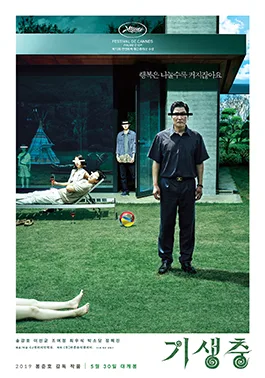 Parasite2019 · Bong Joon-hoThe Kims climb a hill to work and descend a staircase to live; Bong never argues the hierarchy, he blocks it, and then lets one remark about a smell finish what no speech could.
 Spirited Away2001 · Hayao Miyazaki★ 4.3 · 1The bathhouse runs on contracts and names: Chihiro signs hers away to earn the right to stay, and the spirits soaking upstairs are served by a workforce that must keep proving it is useful.
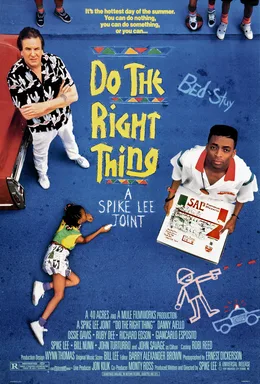 Do the Right Thing1989 · Spike LeeA block where the businesses belong to people who do not live on it; the film spends one hot day itemising who takes money out of a neighbourhood and who only occupies it.
 City of God2002 · Fernando Meirelles, Kátia LundRocket's camera is the only exit the film offers, and it works for exactly one reason — the world outside will pay for pictures of the inside.
 There Will Be Blood2007 · Paul Thomas AndersonPlainview buys a town's land, then its church, then its silence; capital here is a physical force that reshapes the ground it stands on.
 Moonlight2016 · Barry JenkinsChiron's poverty is never discussed and never absent — it is the empty kitchen, the dealer who feeds him, and the fact that nobody had taught him to swim.