Jeremy Strong Wrote to Mark Zuckerberg. The Harder Conversation Is With the Audience
Jeremy Strong says he contacted Mark Zuckerberg before playing him in The Social Reckoning. His promise to approach the role with respect raises a sharper question: what does accuracy owe a living, powerful subject?

The message was not a request for permission
Jeremy Strong says he wrote directly to Mark Zuckerberg after taking the role of the Meta founder in The Social Reckoning, Aaron Sorkin’s follow-up to The Social Network. According to reports published on August 12, Strong told Zuckerberg that he regarded the part and its factual accuracy as serious responsibilities. Strong said Zuckerberg replied, but he did not disclose what the response contained.
That distinction matters. Contacting a living subject can be research, courtesy or a way of testing one’s assumptions; it does not make the subject an editor. Strong’s public description suggests he wanted Zuckerberg to know that the performance would not begin from ridicule. It does not suggest that the actor sought approval for the finished portrait.
The exchange is news because the role arrives with two shadows. Jesse Eisenberg’s Zuckerberg in the 2010 film remains one of the most recognizable screen portraits of a technology executive. The real Zuckerberg, meanwhile, has become a more visible political and corporate figure than he was when that film was made. Strong is therefore not simply replacing an actor. He is stepping between an established fictional character and a living person whose public meaning has continued to change.

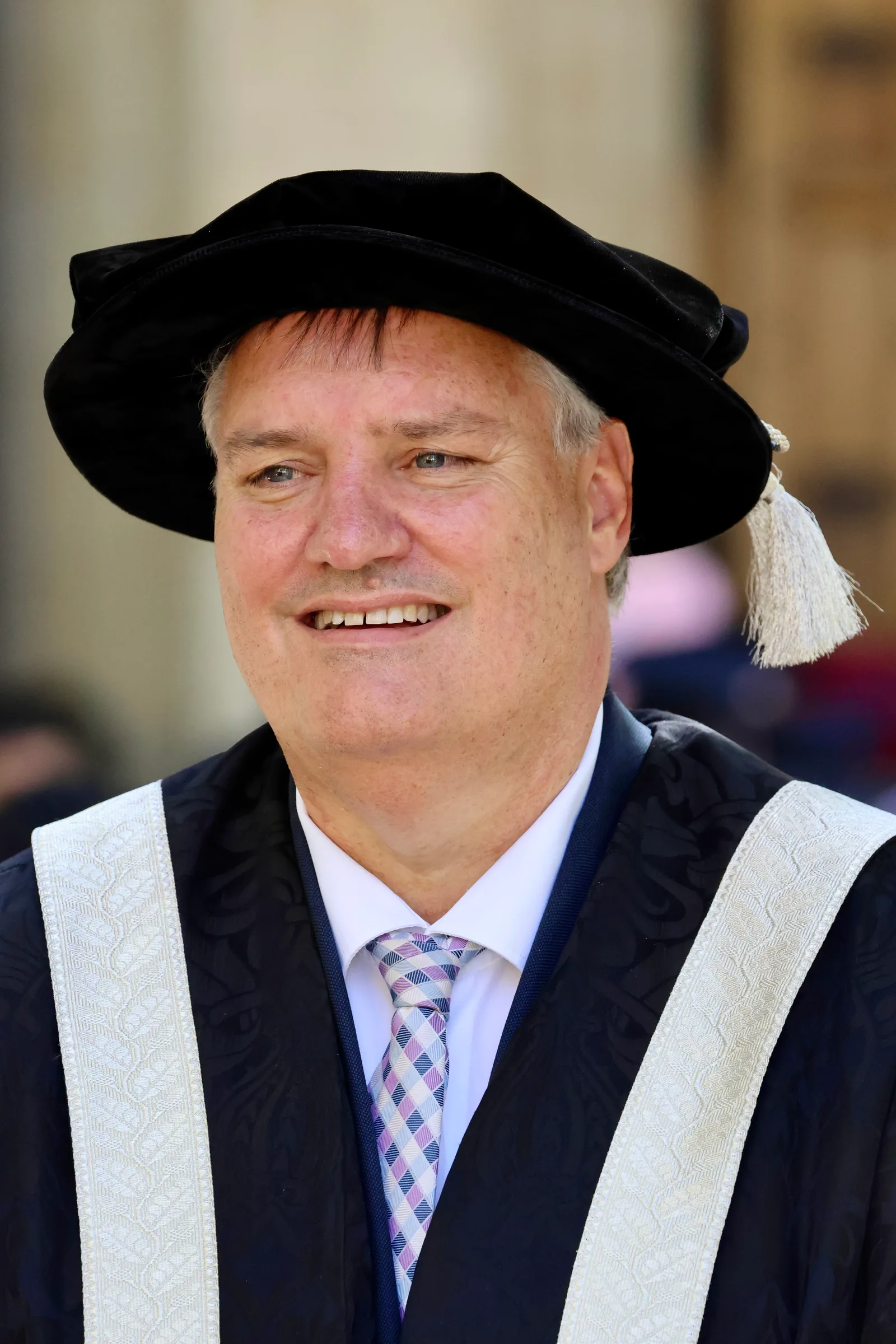
Photo: Bryan Berlin · CC BY-SA 4.0 · source
Respect is a method, not a verdict
Strong’s choice of the word respect can sound like sympathy if it is detached from the work of acting. In practice, respect can mean refusing the easiest shortcut. A performer who begins by deciding that a subject is ridiculous will collect gestures that prove the decision: the haircut, the pauses, the practiced congressional answers. A performer who treats the subject as coherent has to ask what the person believes he is protecting and why his own choices make sense to him.
That does not absolve the subject. It creates a more demanding form of criticism. Power is most revealing when it is shown as a system of reasons rather than a costume worn by a villain. Strong has previously argued that portraying a controversial person as fully human is not the same as endorsing him. His work as Roy Cohn in The Apprentice depended on that separation.