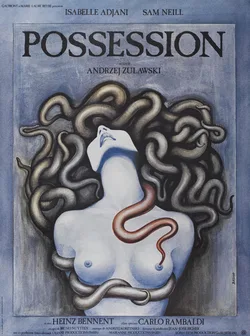
Possession Has a Summer Release Date. That May Be the Remake’s Strangest Choice
Parker Finn’s remake of Andrzej Żuławski’s Possession, starring Margaret Qualley and Callum Turner, is headed to theaters in summer 2027. A release slot built for scale will test whether the film’s ferocious intimacy can survive becoming an event.


Photo: Harald Krichel · CC BY-SA 4.0 · source
A release date turns an experiment into a studio movie
Paramount has placed Parker Finn’s new version of Possession in summer 2027, with reports specifying a June theatrical release. Margaret Qualley and Callum Turner lead the cast, while Madeline Brewer, Emory Cohen, Nicholas Alexander Chavez and Diego Calva have also been reported among the ensemble.
Until now, the project could be imagined primarily as a collision of sensibilities: the director of Smile taking on Andrzej Żuławski’s 1981 breakdown of a marriage, with two performers capable of making emotional instability feel physically dangerous. A summer date changes the frame. It tells exhibitors and audiences that Paramount sees more than an eccentric prestige remake. This is a movie expected to occupy meaningful theatrical space during the most competitive part of the calendar.
That confidence is understandable after Finn turned a disquieting grin into a durable horror brand. It is also the project’s central risk. The original Possession is memorable because it refuses the clean pleasures a broad release usually promises. It is domestic, political, grotesque and exhausting at once. Scaling that experience without domesticating it will be the remake’s real creative problem.
The original resists a single genre label
Żuławski’s film begins with separation. Mark returns to West Berlin and finds that Anna wants to leave their marriage. From there, jealousy and surveillance open into bodily horror, doubles and an eruption in a subway passage that remains one of cinema’s most punishing performances. Describing the film as horror is accurate, but incomplete. It is also a divorce drama pushed beyond realism until private anguish contaminates every room and street.
Its divided Berlin setting is not decorative. Walls, checkpoints and empty spaces make intimacy feel subject to political pressure. The characters cannot separate cleanly because the whole environment is built around division. Remove that historical and geographic tension, and a remake needs another organizing pressure or risks retaining only the famous images.