Sting to Narrate Nino Rota Doc for Venice Premiere
Sting is set to narrate a new documentary on Nino Rota, Walter Fasano’s film on the composer behind The Godfather and Fellini’s great run. The special screening at Venice points to a portrait built less as biography than as a room for music to keep sounding.
Sting is set to narrate a new documentary about Nino Rota, and Walter Fasano’s film, Nino – Un Film Su Nino Rota, will receive a special screening at this year’s Venice Film Festival, according to Spin. That matters because the project is not treating Rota as a museum label attached to a famous title. It is being shaped around a composer whose work moved from Fellini’s La Dolce Vita and 8½ to Francis Ford Coppola’s The Godfather, and around the question of how cinema can make space for music rather than simply explain it.
Sting, Nino Rota, and Venice
Spin reports that Sting will narrate the documentary portrait. The film is directed by Walter Fasano and is scheduled for a special screening at Venice this year. Those are the basic facts, but they already suggest a certain register. A narrator can carry a film toward explanation, or he can hold back and leave room for images, voices, and intervals. Fasano appears to have chosen the second route.
The report says the film takes a “free and associative” approach to Rota’s life. That phrasing matters. It rules out the straight, cradle-to-grave march that so many music documentaries use when they want certainty from chronology. Here, the subject is not pinned to milestones. The film is said to move among the personal, artistic, and spiritual ties that shaped him, and that choice changes the shape of the viewing experience before a frame is even seen. It promises association over outline, recurrence over summary.

Photo: U.S. Navy NSRS by Chief Petty Officer Nathan Carpenter · Public domain · source
A Film Built From Photographs, Archives, and Interviews
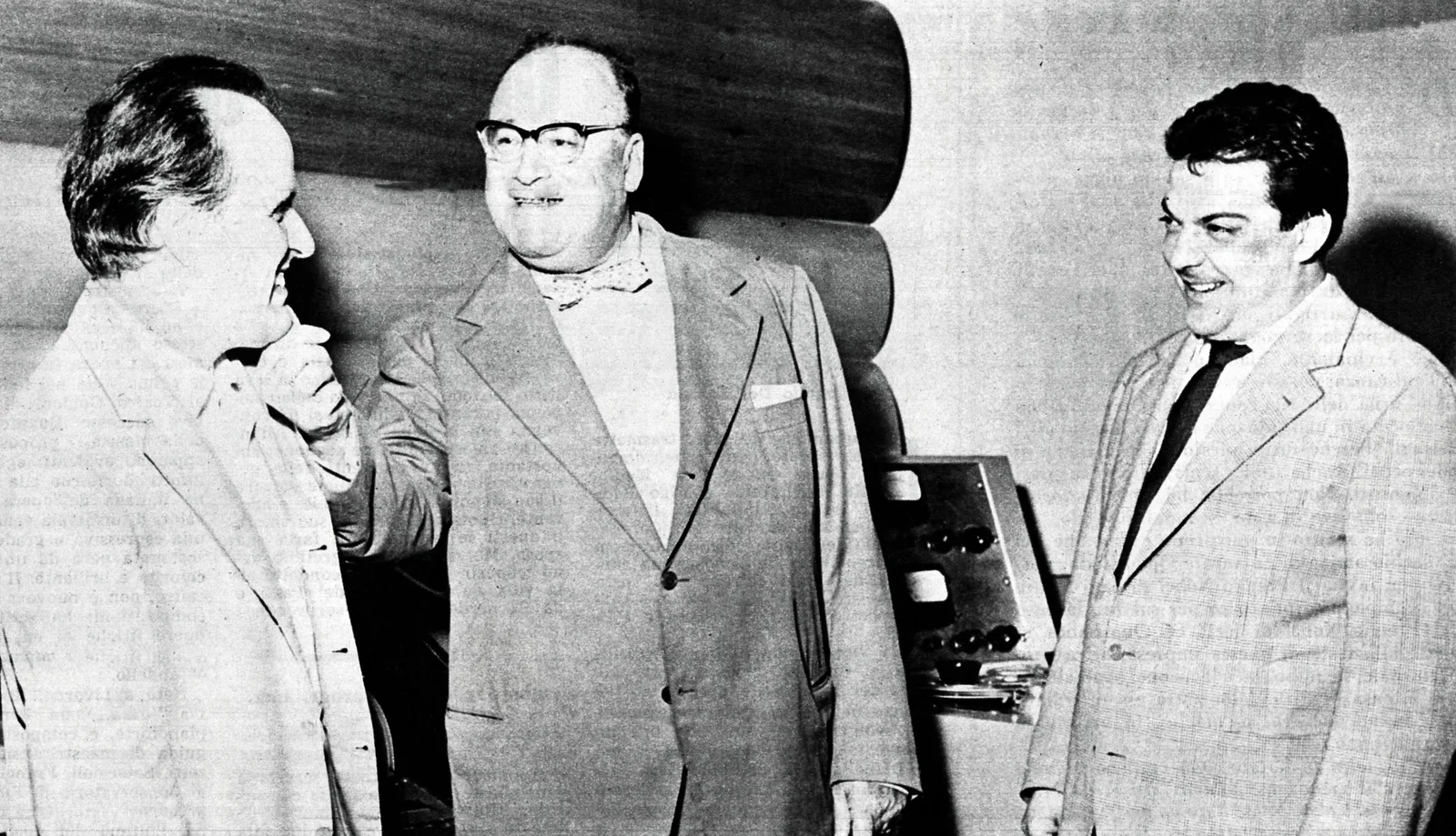
Spin says photographs and archival materials are woven together with interviews. That is an old form, but it still has consequences when it is handled with restraint. Photographs stop time. Archival material brings time back in a different density. Interviews add the present tense of memory. Put together, those elements can either become a recital of facts or a place where the past keeps changing shape. Fasano seems to be aiming for the second effect.