A Bat-Signal With Teeth Marks
The movie is most alive when it stops polishing its myth and lets chaos put its boots on the table.
The verdict
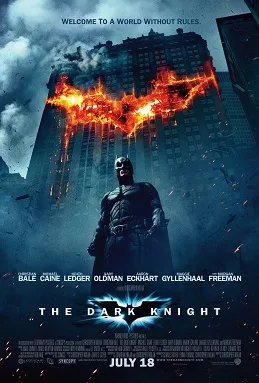
Christopher Nolan’s The Dark Knight is a grand, bruising crime picture that sometimes mistakes solemnity for depth, but it has Heath Ledger’s Joker tearing holes in the screen, and holes are what this movie needs.
The Jolt in the Dark
I went into The Dark Knight expecting machinery, and for a while that is exactly what it gives you: sleek, expensive machinery, all pistons and moral upholstery. Christopher Nolan loves a system. He loves men explaining the system. He loves a city that can be diagrammed on glass by grave professionals in suits. Gotham here is less a place than a pressure chamber, and Nolan keeps tightening the bolts until you can hear the audience stop rustling. That is no small thing. In 2008, when comic-book movies were still trying to look respectable without looking embalmed, this one arrived wearing a black tie and hiding a switchblade.
The opening bank robbery is a corker: hard, clean, nasty, with masked criminals chewing through one another like capitalism got a punchline. It has the snap of a good heist picture, the kind where each cut seems to say, keep up. Then Ledger appears, and the movie’s temperature changes. Not because he is “dark” or “iconic” or any of the other museum-label words that have been pasted onto the performance until you can barely see it. He is funny. That is the thing. He licks his lips, hunches forward, drags his voice through gravel and nursery rhyme, and suddenly the film’s big moral architecture has a vandal in the lobby. He plays the Joker as if thought itself gives him hives. He is always reacting to a private joke, and the joke is civilization.
This is where the movie goes through you. Not in the speeches, not in the big ethical dilemmas Nolan and Jonathan Nolan arrange like silverware, but in the little shocks: the Joker clapping in a jail cell, his grotesque politeness, the way he seems to insult every room by entering it. He makes the other characters look over-prepared, which is not a flaw so much as the movie’s secret subject.
Respectability With a Cape
Christian Bale’s Batman is a fascinating near-miss. As Bruce Wayne, he is sharp enough, with that billionaire smirk worn like a rented tuxedo. As Batman, he is an idea with a sore throat. The voice still sounds like a man trying to frighten a parking garage. But Bale understands the prison of the role: Batman can’t be loose, can’t be sexy, can’t even really be witty. He is burden made muscular. The movie keeps asking whether a symbol can stay pure once it has to do business with flesh-and-blood people, and Bale’s stiffness becomes part of the answer.
Aaron Eckhart, as Harvey Dent, gives the film its civic gleam. He has the square jaw and campaign-ready smile, but also a useful impatience, a hint that goodness may enjoy its own reflection. Gary Oldman’s Gordon is all tired decency and mustache, a man who looks as if bureaucracy has been sleeping on his chest. Michael Caine and Morgan Freeman bring warmth from the adult table; they are so deft they can make exposition sound like concern. Maggie Gyllenhaal is a major improvement over the decorative vacancy these movies might have settled for. She gives Rachel Dawes a wary intelligence, though the movie still hems her in with men’s destinies.