A Good Song in a Very Expensive Echo
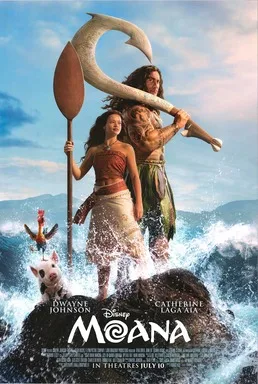
Catherine Laga'aia gives the remake a pulse of its own whenever the digital ocean and corporate memory stop crowding her out.
The verdict
The live-action Moana has enough warmth, rhythm and star power to keep a family crowd happy, but it spends most of that energy proving the animated film never needed replacing.
The girl is alive; the remake is on life support
Here is the strange good news about Disney's live-action Moana: Catherine Laga'aia is wonderful. She does not imitate the animated heroine's bounce or treat a beloved movie like an audition she is afraid to fail. She plants her feet, sings “How Far I'll Go” with a clear, open force, and makes Moana's curiosity look physical. You see the horizon tug at her. For a few minutes, the remake stops defending its existence and becomes a musical with a new young star at its center.
Then the movie remembers the assignment. The ocean rises in the same comic shapes. The pig and chicken hit their marks. A line you remember approaches, waits for recognition, and lands exactly where the old line landed. Thomas Kail directs with speed and professional brightness, but the film is trapped inside the audience's memory of another film. It cannot surprise us without risking the brand, and it cannot repeat the original without becoming a very expensive echo.
The island scenes expose the problem first. Real bodies should add friction: sand under a foot, a crowd that cannot move with animated precision, weather changing the color of a face. Sometimes they do. Rena Owen's Tala has a loose, mischievous warmth, and John Tui gives Moana's father a tired authority rather than generic obstruction. But the production keeps polishing the world until the live setting feels almost as sealed as animation, only heavier.
Maui walks off with the movie, naturally
Dwayne Johnson was always hiding inside the animated Maui, so letting him occupy the whole body is the remake's easiest and best decision. He knows where the jokes bend, where to let vanity swell, and when a grin should confess that the demigod is scared. “You're Welcome” works because Johnson does not sing it as a sacred franchise object. He plays it as a sales pitch delivered by a man who believes his own brochure.
His scenes with Laga'aia have the rough playfulness the movie needs. She refuses to become his straight woman; he refuses to surrender the frame without a fight. Their argument has rhythm. When the digital tattoo on Maui's chest interrupts him, the effect belongs to the performance rather than sitting on top of it. That is the rare remake trick worth keeping: animation and flesh heckling each other in the same shot.
The effects elsewhere are handsome and fussy. The water gleams, the boats cut clean lines, and the Kakamora arrive like a studio note demanding that the picture wake up. But brightness is not buoyancy. The animated film could change shape in an instant; this one has to haul every fantasy object into photographic space and explain its weight. The effort shows. You can feel the computers sweating beneath the ocean.