A Jukebox of Sin, Grace, and Very Good Coffee
It is the rare movie that can make a milkshake, a Bible verse, and a pair of hit men in black suits feel like part of the same moral weather.
The verdict
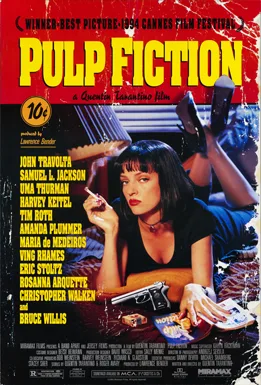
Quentin Tarantino’s Pulp Fiction is a dazzling crime picture that earns its cool by staying curious about the souls hiding under the suits, guns, jokes, and bad decisions.
The Talk Before the Trigger
I first saw Pulp Fiction in a theater where the audience had that alert, tilted-forward feeling, the sense that everyone had realized, at roughly the same time, that the movie was not going to behave. It begins with talk, not thunder. People sit in booths, ride in cars, stand in rooms, and talk their way toward danger as if danger were just another appointment. Tarantino’s great trick here is not that his criminals speak colorfully. It is that they speak with the confidence of people who have spent their lives filling dead air.
John Travolta, as Vincent Vega, gives one of those comeback performances that seems to contain a private joke between actor and audience. He moves with a sleepy grace, a man who has seen too much and understood too little. Samuel L. Jackson’s Jules Winnfield is sharper, funnier, more frightening, and, crucially, more available to wonder. Watch Jackson’s eyes when Jules begins to suspect that the universe may be addressing him personally. A lesser crime movie would make that a gag or a pose. This one lets it become the hinge of a soul.
The famous early business with the burgers and the briefcase is still a marvel of control. The room is shabby in the way rooms get when young men think they are dangerous enough to ignore cleaning. Jules takes command before the guns do. He makes a meal, a speech, a little courtroom, and then the movie reminds us that style is not the same thing as mercy.
Funny Until It Isn’t
Pulp Fiction is violent, but it is not, to my eye, a contemptuous film. That distinction matters. Tarantino is fascinated by fools, addicts, bruisers, hustlers, and people who mistake a line of patter for a philosophy. He does not ask us to approve of them. He asks us to look at them long enough that they become more than their crimes. Cruelty without curiosity is the thing I cannot forgive in movies. This one has curiosity spilling out of the trunk.
Uma Thurman’s Mia Wallace is not on screen as much as memory insists she is, which is part of her power. She enters like a rumor that learned to walk. Her scenes with Vincent are built from little tests: who will blink first, who will admit need, who will make the other person laugh. The Jack Rabbit Slim’s sequence could have been pure decoration, all neon and nostalgia. Instead it becomes a delicate comic negotiation between two people who should know better than to enjoy themselves this much.
Bruce Willis, as Butch, gives the film its battered conscience from another angle. He has the face of a man who has been hit professionally and disappointed personally. His section is the closest the movie comes to an old hard-boiled fable, and it understands something about pride: sometimes a man makes the wrong choice for money, then the right one for reasons he could not explain on a form.
The movie’s jokes still land because they are not hung on punchlines alone. They come from timing, panic, vanity, and the absurd etiquette of criminal life. A man may be worried about murder, but he is also worried about upholstery. A gangster may inspire terror, but someone still has to discuss breakfast. The comedy is not beside the crime. It is the human static around it.