A Musical for Dreamers Who Have Paid Rent
It dances like a fantasy and stings like a memory you thought you had made peace with.
The verdict
Damien Chazelle’s La La Land is a radiant, melancholy musical that understands both the thrill of ambition and the bill that comes due.
The City as a Stage
There is a particular Los Angeles morning when the traffic looks less like civilization than a punishment invented for people who once said they liked sunshine. Damien Chazelle opens La La Land there, on a freeway ramp, and then does the most unreasonable thing imaginable: he turns the jam into a musical number. Car doors fly open, commuters leap onto hoods, and the whole thing blooms into color and motion. It is not realistic, thank heaven. It is truer than realistic. This is how the city feels to the people who arrive there with a head full of impossible plans.
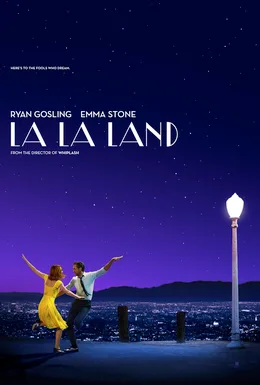
La La Land is a movie about Mia, an aspiring actress played by Emma Stone, and Sebastian, a jazz pianist played by Ryan Gosling. They meet not with violins but with irritation, which is often how romance begins in movies and sometimes in life. She works on a studio lot and endures auditions that seem designed to test not talent but spiritual durability. He is a purist with a stubborn streak, a man who loves jazz so much he risks turning it into a shrine where only he is allowed to pray.
Stone and Gosling are not cast because they are the slickest singers or dancers available. That is part of the film’s charm. They move like people reaching for grace, not like machines manufactured to deliver it. Their imperfections are humanizing. When they dance at dusk in the Hollywood Hills, trading little barbs while their bodies have already started negotiating a truce, the scene has the lightness of old studio musicals and the nervous pulse of modern courtship. You can feel two people deciding, against their better judgment, to become vulnerable.
Songs of Wanting
Chazelle, working with composer Justin Hurwitz, makes a musical that loves musicals without embalming them. The film nods toward the classics, yes, but it is not a museum tour. Its colors are bold, its camera often glides as if it has fallen in love with movement itself, and its songs are built around yearning rather than showboating. The recurring piano theme has the simplicity of a thought you cannot stop thinking.
What I admire most is that the movie treats dreams as both noble and slightly ridiculous. Mia and Sebastian are funny because their ambitions have made them self-serious, and touching because the self-seriousness is earned. Anyone who has tried to make art, or tried to love someone making art, will recognize the way encouragement can curdle into pressure and pressure can disguise itself as concern. The film is generous to dreamers, but it does not flatter them. It knows that passion can be a light in the window and also a fire alarm going off at 3 a.m.
Gosling gives Sebastian a prickly romanticism. He is charming, but Chazelle and Gosling are careful not to make his stubbornness automatically heroic. His devotion to jazz is sincere, and the film respects it, while also noticing that sincerity can become a bunker. Stone is the film’s open heart. Her face is one of the great special effects here: hopeful, embarrassed, bruised, then hopeful again before she can stop herself. She makes Mia’s persistence feel less like inspirational-poster grit than a private negotiation with humiliation.