Three Hours in the Rain and I Wanted More Rain
For two hours this is the best-looking dread in any picture with a cape in it, and then somebody remembers it has to end big.
The verdict
Matt Reeves made a genuinely frightening detective picture and then bolted a disaster movie onto it, and I resent the disaster movie for interrupting.
Minor spoilers ahead
The Rain Is the Performance
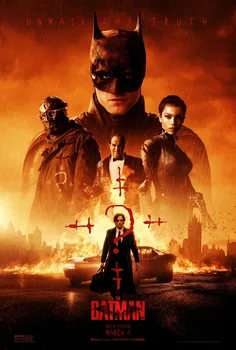
Let me tell you what worked on me, because that is the only thing I can report honestly. It was the rain. Greig Fraser shot this film as though electric light were expensive — everything amber, everything wet, faces coming out of the dark a beat later than you want them to. There is a shot early on, a corridor of red practicals with a figure walking toward you out of it, that made the back of my neck go cold. Not because of what happens. Because of how little I could see.
That is a real achievement and I want to be precise about why. Most pictures in this genre are lit so that nothing is ever in doubt. This one keeps you a half-second behind, and a half-second is where dread lives. The opening, filmed through a scope from across a street, is voyeurism with the audience conscripted into it — you are looking at a family through glass and you are not a good person for doing it. Reeves does not underline this. He just makes you do it and moves on.
Robert Pattinson barely plays Bruce Wayne, and that is the smartest decision in the film. He is a shut-in with terrible hair and no small talk, and when he takes the mask off he is somehow less present rather than more. I have seen actors work hard to make the man under the cowl interesting. Pattinson works hard to make him absent, and it is far more unsettling.
Where It Goes Dead
Two hours and eight minutes. I looked. That is when the picture stops being a detective story and becomes a municipal emergency, and I felt it go — the specific sensation of a film changing its mind about what it is. Up to then, every scene had someone in a room lying to someone else. After it, water is rising and people are shouting instructions.
The action was never the reason to be there. The car chase is the exception and it is terrific, mostly because it is filmed from inside the traffic instead of above it, and because it ends with an upside-down shot of a man walking toward a wreck that is pure comic-book relish. Colin Farrell, buried under an unreasonable amount of latex, is the only person in the film having fun, and the movie is better every minute he is in it. The interrogation scene where he cannot follow his own Spanish is the funniest thing in a picture that otherwise takes a very cold shower.
Zoë Kravitz is doing something good and the film keeps interrupting her to explain the plot. She and Pattinson have an actual charge — two people who recognise each other's damage and are not going to discuss it — and every scene between them is worth three of the scenes about ledgers and informants.
The Speech
There is a speech near the end about hope. You will know it when it arrives, because the score arrives with it. I do not believe a word of it, and I do not think the film does either — it is the sound of a three-hour movie negotiating with the expectation that it must mean something uplifting. Everything the picture actually argues is in its photography, and its photography argues that the city is a wet trap and that watching people is a sickness. Then a voice-over asks us to feel better.